

New Location at 8406 E. Shea Blvd #100, Scottsdale 85260 - Accepting New Patients

How Long Should You Rest After an Epidural Steroid Injection?
Date: March 23, 2026
Back and nerve pain affect millions of adults across the United States every year, often interfering with everyday activities such as walking, driving, or sitting comfortably at work.When conservative treatments like physical therapy, medications, or lifestyle changes do not provide enough relief, physicians may recommend an epidural steroid injection to reduce inflammation around irritated spinal nerves.
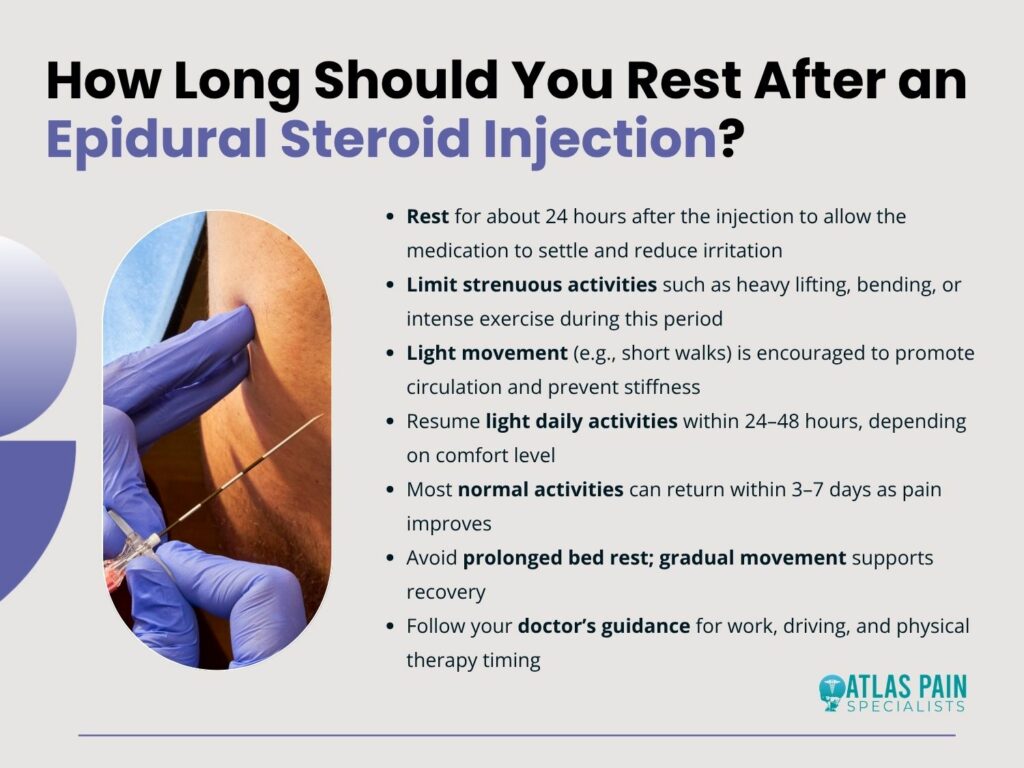
Because the procedure is minimally invasive, many patients expect a quick recovery but still wonder how much rest is necessary afterward. How long should you rest after an epidural steroid injection? In most cases, doctors recommend limiting activity for about 24 hours before gradually returning to normal routines.
Understanding the recovery timeline helps patients protect the injection site while giving the medication time to reduce inflammation and improve mobility.
Understanding Epidural Steroid Injections and Their Purpose
An epidural steroid injection is a common non surgical treatment used to manage nerve related spinal pain. During the procedure, a physician injects corticosteroid medication into the epidural space around the spinal cord and nerve roots.
The goal is to reduce inflammation and swelling around irritated nerves, which can relieve pain and improve mobility. Epidural steroid injections target inflammation at its source, helping calm irritated nerves and allowing patients to move more comfortably.
What Happens During the Procedure
The procedure usually takes place in an outpatient clinic or hospital setting and typically lasts less than 30 minutes. Doctors use imaging technology such as fluoroscopy to guide a thin needle into the epidural space with precision.
Once the needle is positioned correctly, a mixture of corticosteroid medication and a local anesthetic is injected.The anesthetic provides immediate but temporary pain relief, while the steroid medication works gradually over several days to reduce inflammation.
Patients are typically monitored for a short time after the procedure and are then able to return home the same day. Because the treatment does not involve surgery, the recovery period is usually short.
Conditions Commonly Treated
Physicians use epidural steroid injections to treat several spinal conditions that cause nerve irritation and inflammation. These include herniated discs, spinal stenosis, degenerative disc disease, and sciatica.
Each of these conditions can place pressure on spinal nerves, leading to pain that radiates into the arms or legs. According to the American Society of Interventional Pain Physicians in its 2021 clinical guidelines, epidural steroid injections remain one of the most widely used non surgical treatments for spinal nerve pain in the United States.
By reducing inflammation around nerve roots, these injections can provide meaningful relief and allow patients to participate more actively in rehabilitation or physical therapy programs.
Who Is a Good Candidate for Epidural Steroid Injections
Not every patient with back pain needs this type of treatment. Doctors usually recommend epidural steroid injections for individuals experiencing nerve related pain that has not improved with other therapies.
These injections are typically considered when inflammation around spinal nerves is clearly identified and other conservative treatments have not produced enough relief. Patients who meet specific medical criteria are more likely to benefit from epidural steroid injections as part of a broader pain management plan.
Many physicians evaluate candidates based on symptoms, diagnostic imaging, and response to previous treatments. In general, patients who may benefit from the procedure include:
- Individuals with nerve pain caused by herniated discs or spinal stenosis
- Patients who have tried physical therapy or medications without sufficient improvement
- People experiencing radiating pain such as sciatica that travels into the legs or arms
- Patients looking to delay or avoid spinal surgery
- Individuals who need temporary pain relief to participate in rehabilitation programs
Imaging tests such as MRI or CT scans are often used to confirm nerve compression before the procedure is recommended. According to the American Academy of Orthopaedic Surgeons in 2022, epidural injections are frequently used when conservative treatments fail to control nerve inflammation but surgery is not immediately necessary.
For many patients, the injection provides a window of reduced pain that allows them to participate more fully in physical therapy and strengthen the muscles supporting the spine.
Recommended Rest Time After an Epidural Steroid Injection
After receiving the injection, a short period of rest helps the body adjust to the medication and protects the treated area from irritation. Although the procedure is minimally invasive, the tissues surrounding the spine may still be sensitive during the first day.
Doctors usually recommend limiting strenuous activity during this initial recovery period. For most patients, about 24 hours of reduced activity is enough before gradually returning to normal movement.
The First 24 Hours
The first day after the injection is mainly focused on rest and gentle movement. Patients are typically advised to relax at home for the remainder of the day after the procedure.
Short walks around the house are usually encouraged because they promote circulation and help prevent stiffness.Strenuous activities such as lifting heavy objects, bending repeatedly, or intense exercise should be avoided during this time.
Some patients may notice mild soreness at the injection site or temporary numbness caused by the anesthetic. These symptoms usually fade within a day or two.
Typical Recovery Timeline
Recovery can vary depending on the patient’s health and the condition being treated, but physicians often describe the process in stages as the medication begins working.
| Time After Injection | Recommended Activity | What Patients May Feel |
| First 24 hours | Rest and light walking | Mild soreness or numbness |
| 24 to 48 hours | Resume light daily activities | Gradual pain improvement |
| 3 to 7 days | Return to most normal activities | Steroid begins full effect |
| 1 to 2 weeks | Physical therapy may begin | Increased mobility |
According to the American Academy of Orthopaedic Surgeons in 2022, steroid medications often require several days to fully reduce inflammation around irritated nerves. As swelling decreases, many patients experience improved movement and reduced pain.
Why Gradual Movement Helps Recovery
While rest is important during the first day, complete bed rest for several days is usually not recommended. Gentle movement helps maintain circulation, which supports the body’s natural healing process.
Walking short distances and performing light daily tasks can also prevent stiffness in the muscles surrounding the spine. A 2021 guideline from the North American Spine Society explains that light movement following spinal procedures often improves recovery and reduces discomfort caused by prolonged inactivity.
Gradually increasing activity levels allows the body to adjust to the steroid medication while protecting the treated area from excessive strain.Patients are often encouraged to listen to their bodies and slowly reintroduce regular activities as symptoms improve.
Activities to Avoid During the Initial Recovery Period
Although most patients recover quickly after the procedure, avoiding certain movements during the early recovery phase helps protect the injection site. Excessive strain on the spine can irritate the treated area and delay the anti-inflammatory effects of the medication.
Taking a cautious approach to physical activity during the first few days helps ensure the injection delivers its intended benefits.
Physical Activities to Limit
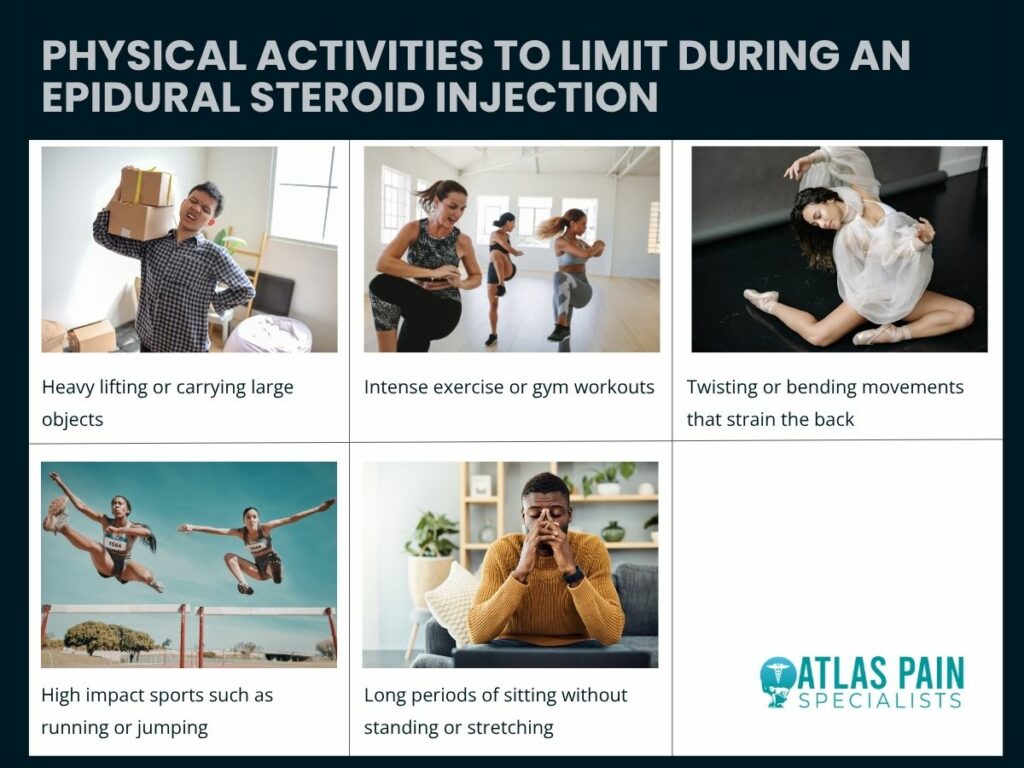
Doctors typically advise patients to avoid several types of activity that place unnecessary pressure on the spine:
- Heavy lifting or carrying large objects
- Intense exercise or gym workouts
- Twisting or bending movements that strain the back
- High impact sports such as running or jumping
- Long periods of sitting without standing or stretching
These restrictions are usually temporary and last only a few days. Once soreness decreases and mobility improves, patients can gradually resume their normal physical routines.
Driving and Work Considerations
Driving immediately after the injection may not be recommended, especially if sedation was used during the procedure. Patients are often advised to arrange transportation home and wait until any numbness or weakness from the anesthetic has completely worn off.
Returning to work depends largely on the type of job a patient has. Individuals with desk based roles may return the following day, while those with physically demanding jobs may need additional time before resuming full duties.
According to the Cleveland Clinic in 2023, most people can return to regular daily activities within one or two days after an epidural injection, although strenuous physical work may require additional recovery time.
Tips for a Comfortable Recovery at Home
Simple habits at home can make the recovery period easier and more comfortable. Many physicians recommend applying an ice pack to the injection site if mild soreness develops. Ice can help reduce inflammation and relieve discomfort during the first day or two.
Maintaining good posture while sitting and sleeping can also support spinal recovery. Using a supportive chair or placing a small pillow behind the lower back can reduce pressure on the spine. Gentle walking throughout the day helps prevent stiffness and keeps muscles active.
According to the Cleveland Clinic in 2023, applying ice and maintaining light movement can significantly reduce post injection soreness and improve overall comfort during recovery.
Signs of Normal Recovery and When to Contact a Doctor
Most patients experience mild and temporary sensations after an epidural steroid injection as the body adjusts to the medication. These symptoms are generally part of the normal healing process and often resolve quickly.
Understanding what typical recovery feels like helps patients avoid unnecessary worry while monitoring for unusual symptoms.
Normal Side Effects
The most common side effect is mild soreness near the injection site. This discomfort often feels similar to a small bruise and typically fades within a day or two.
Some patients may also experience temporary numbness or weakness due to the anesthetic included in the injection.Pain relief sometimes occurs in stages.
The anesthetic may provide immediate relief that fades after several hours, followed by the gradual anti-inflammatory effect of the steroid medication. According to the Cleveland Clinic in 2023, many patients begin noticing improvement in symptoms within three to seven days after the injection.
Warning Signs That Need Medical Attention
Although complications are rare, certain symptoms should be evaluated by a healthcare professional. Severe headaches that worsen when standing, fever, swelling near the injection site, or persistent numbness should be discussed with a physician.
Patients should also contact their doctor if pain significantly worsens or if unusual neurological symptoms appear. Prompt evaluation helps ensure that any rare complications are addressed quickly and safely.
How Long Should You Rest After an Epidural Steroid Injection
Recovery after this procedure is typically quick compared with many other treatments for spinal pain. For most people, resting for about 24 hours and gradually resuming normal activity provides enough time for the body to adjust to the medication.
Light movement during the following days often supports healing by improving circulation and preventing stiffness.Many physicians recommend combining epidural injections with physical therapy, stretching, and strengthening exercises once inflammation decreases.
According to the American Society of Interventional Pain Physicians in 2021, epidural steroid injections are often most effective when used as part of a broader pain management strategy.While some patients experience relief lasting several months, others may require repeat injections depending on the severity of their condition.
Understanding the recovery timeline helps patients approach the procedure with confidence while preparing for the next steps in long term spine health and pain management.
About Dr. Sean Ormond

Dr. Sean Ormond is dual board-certified in Anesthesiology and Interventional Pain Management. He completed his anesthesia residency at Case Western University in Cleveland, Ohio where he served as Chief Resident, followed by an interventional pain management fellowship at Rush University in Chicago, IL. Following fellowship, Dr. Ormond moved to Phoenix and has been practicing in the Valley for a few years before deciding to start his own practice.