
New Location at 8406 E. Shea Blvd #100, Scottsdale 85260 - Accepting New Patients
Best Meditation for Pain Relief and Stress Reduction
Date: July 23, 2026
The best meditation for pain relief and stress reduction helps calm the nervous system and improve the way the brain responds to pain, making both physical and emotional discomfort easier to manage. Chronic pain affects more than the body, often leading to anxiety, poor sleep, fatigue, and emotional strain.
Over time, this creates a cycle where stress intensifies pain and pain increases stress. Meditation offers a natural way to break that cycle by promoting relaxation, lowering stress hormones, and improving emotional resilience.
While it is not a replacement for medical treatment, the best meditation for pain relief can become an effective part of a long-term pain management strategy.
How Meditation Helps Reduce Pain and Stress
Meditation reduces pain by calming the brain's response to discomfort while helping the body relax naturally. Pain is more than a physical sensation caused by injured muscles, joints, or nerves.
The brain also plays a major role in determining how strongly pain is felt. When you are stressed, anxious, or emotionally overwhelmed, the brain often amplifies pain signals, making discomfort feel more intense than it actually is.
Regular meditation helps interrupt this cycle by calming the nervous system and encouraging the body to enter a relaxed state. As breathing slows and muscles loosen, the brain becomes less reactive to pain, allowing many people to cope with chronic discomfort more effectively.
Ways Meditation Helps Reduce Pain
1. Calms the Nervous System
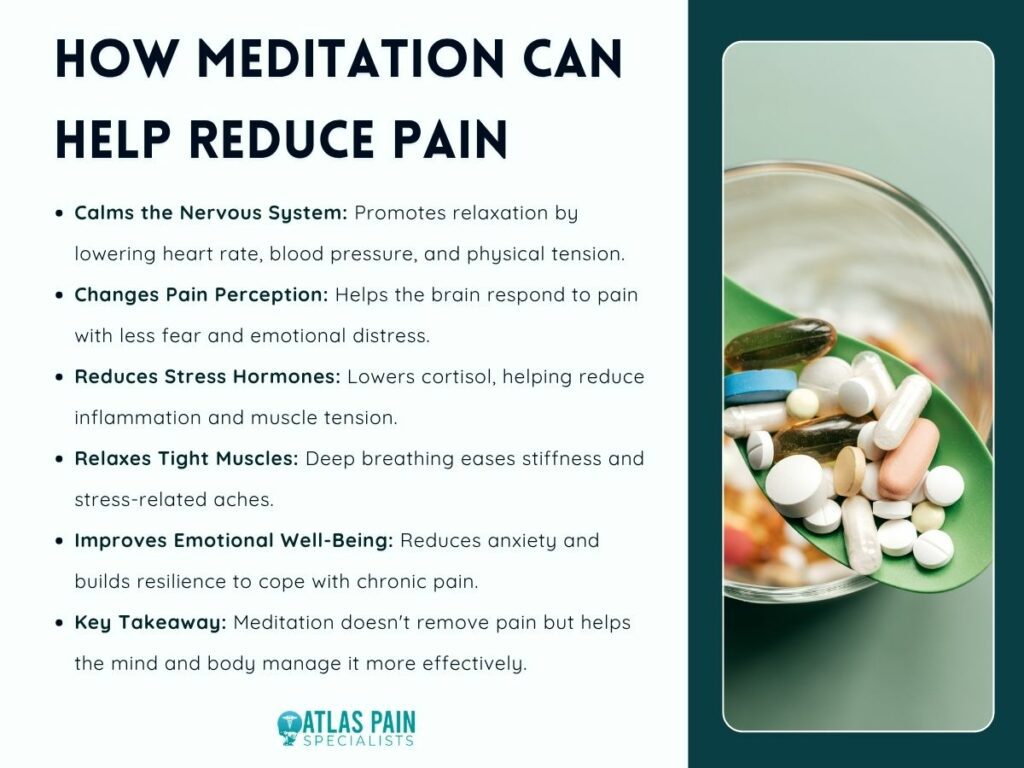
Meditation activates the body's relaxation response, slowing the heart rate, lowering blood pressure, and reducing overall physical tension.
2. Changes How the Brain Processes Pain
With regular practice, meditation helps the brain respond to pain with less fear and emotional distress, making discomfort feel more manageable.
3. Reduces Stress Hormones
Meditation lowers cortisol levels, helping decrease inflammation, muscle tension, and stress that can worsen chronic pain.
4. Relaxes Tight Muscles
Deep breathing and mindful awareness encourage muscles throughout the body to relax, easing stiffness and reducing stress-related aches.
5. Improves Emotional Well-Being
Meditation reduces anxiety and promotes emotional balance, helping people cope better with the mental challenges that often accompany long-term pain.
Meditation does not eliminate the source of pain, but it changes the way the body and mind respond to it. By reducing stress, relaxing muscles, and improving emotional resilience, regular practice can make pain feel less overwhelming and support better overall health.
The Science Behind Meditation and Pain Relief
Research shows that meditation influences the areas of the brain responsible for pain perception and emotional regulation. Scientists once believed meditation worked simply by distracting people from pain.
Today, brain imaging studies tell a different story. Researchers have found that meditation changes activity in brain regions involved in processing pain, attention, and emotions.
These changes help reduce the intensity of pain while improving a person's ability to cope with chronic discomfort. Many healthcare providers now recommend meditation alongside conventional treatments for long-term pain conditions.
Several studies have shown benefits for people living with:
- Chronic lower back pain
- Osteoarthritis
- Rheumatoid arthritis
- Fibromyalgia
- Migraine headaches
- Neuropathic pain
Meditation also improves sleep quality, lowers anxiety, and reduces depression. Since all three strongly influence pain levels, these additional benefits often lead to noticeable improvements in overall quality of life.
Unlike medication, meditation has no significant side effects and can be practiced almost anywhere, making it an accessible tool for long-term pain management.
Best Meditation for Pain Relief Techniques
Different meditation techniques relieve pain in different ways, so choosing the right one depends on your symptoms and personal preference.
Some people prefer quiet mindfulness, while others find guided sessions or breathing exercises easier to follow. There is no single technique that works for everyone, but several approaches have consistently shown positive results.
Mindfulness Meditation
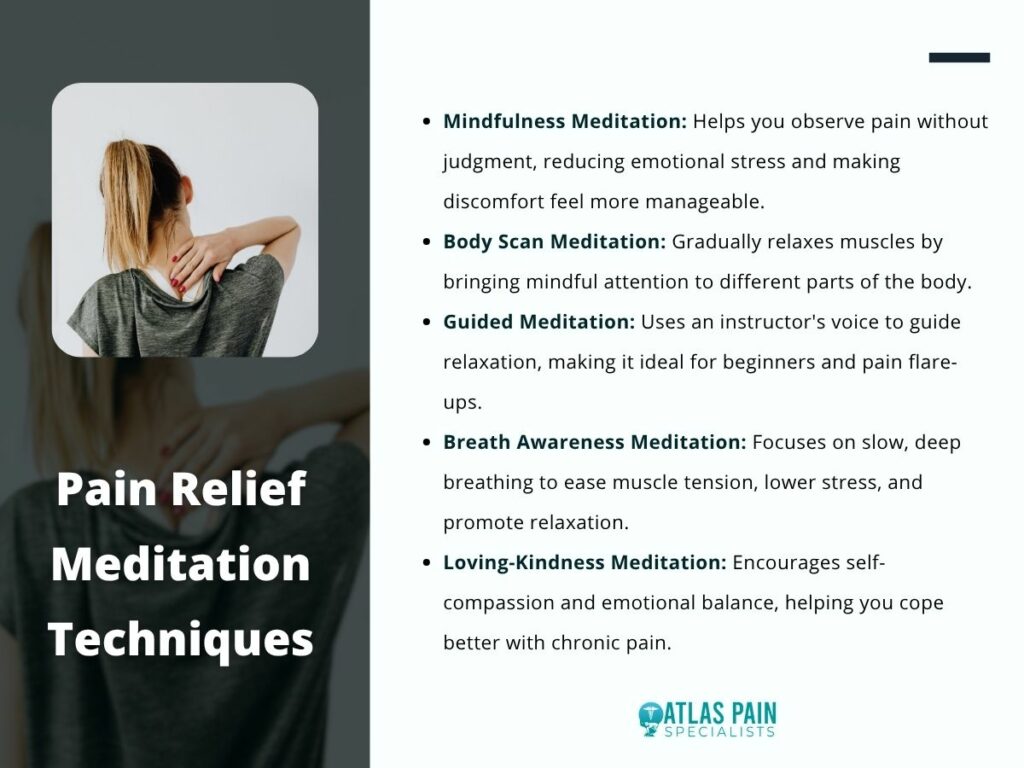
Mindfulness meditation is widely considered the best meditation for pain relief because it teaches you to observe pain without immediately reacting to it.
Instead of resisting discomfort, you simply notice it without judgment. This reduces the emotional suffering that often accompanies chronic pain.
A simple mindfulness session usually includes:
- Sitting comfortably
- Focusing on your breathing
- Observing thoughts without following them
- Gently returning attention to your breath
With regular practice, many people notice they become less overwhelmed by pain, even if the physical sensation remains.
Body Scan Meditation
Body scan meditation involves slowly moving your attention through different parts of your body, noticing sensations without trying to change them.
As awareness moves from head to toe, muscles naturally begin to relax. This makes body scans especially useful for people whose pain is linked to muscle tension or widespread discomfort.
Body scan meditation works particularly well for:
- Fibromyalgia
- Chronic neck pain
- Back pain
- Arthritis
- General muscle tension
Many people also find this meditation helpful before bedtime because it encourages deep relaxation.
Guided Meditation
Guided meditation is an excellent option for beginners. Instead of practicing alone, you simply listen to an instructor who leads you through breathing exercises, relaxation techniques, or calming visualizations.
Because someone else provides the guidance, it is often easier to stay focused, especially during painful flare-ups.
Breath Awareness Meditation
Sometimes the simplest meditation techniques are the most effective.
Breath awareness meditation focuses entirely on slow, controlled breathing. Deep breathing activates the body's relaxation response and helps reduce physical tension throughout the body.
Regular breathing meditation may help:
- Lower heart rate
- Relax tight muscles
- Reduce anxiety
- Improve focus
- Decrease stress hormones
Even five minutes of slow breathing can noticeably improve stress-related pain.
Loving-Kindness Meditation
Chronic pain often affects emotional health just as much as physical health.
Loving-kindness meditation focuses on developing compassion toward yourself and others by silently repeating positive phrases such as:
- May I be healthy.
- May I be peaceful.
- May I be free from suffering.
This practice helps reduce frustration, anger, and emotional distress that frequently accompany long-term pain.
Choosing the Best Meditation for Pain Relief Based on Your Condition
Matching your meditation practice to your type of pain often produces better long-term results. Different pain conditions affect the body differently. While every meditation technique promotes relaxation, some are particularly effective for specific health concerns.
| Pain Condition | Best Meditation | Primary Benefit |
| Arthritis | Mindfulness Meditation | Reduces pain sensitivity and stiffness |
| Fibromyalgia | Body Scan Meditation | Encourages full-body relaxation |
| Chronic Back Pain | Guided Meditation | Reduces stress and muscle tension |
| Neck & Shoulder Pain | Breath Awareness | Releases tight muscles |
| Migraines | Mindfulness + Breathing | Lowers stress-related triggers |
| Stress-Related Pain | Loving-Kindness Meditation | Improves emotional well-being |
Although this table provides useful guidance, consistency matters more than choosing the "perfect" technique. The meditation you enjoy practicing regularly is usually the one that produces the greatest benefits.
How to Start a Daily Meditation Practice
A short daily meditation routine is more effective than occasional long sessions. Many beginners think meditation requires an hour of silence every day. In reality, starting with five to ten minutes is often enough to build a lasting habit.
Choose a quiet place where you feel comfortable. Sit in a chair, on a cushion, or even lie down if necessary. Close your eyes and allow your breathing to settle into a slow, natural rhythm.
Instead of trying to empty your mind, simply notice your breathing. Thoughts will come and go, and that is completely normal. Each time your attention wanders, gently bring it back to your breath.
Many people find it easiest to meditate:
- Soon after waking up
- During a lunch break
- After exercise
- Before going to bed
Practicing at the same time each day makes meditation easier to maintain over the long term. As your confidence grows, gradually increase your sessions to fifteen or twenty minutes. Small, consistent practice is far more valuable than occasional lengthy sessions.
Common Challenges and How to Stay Consistent
The biggest obstacle to meditation is expecting perfection instead of steady progress. Starting a meditation practice is simple, but staying consistent can be difficult, especially when you expect immediate results.
Most beginners experience similar challenges, and understanding them can make it easier to build a lasting habit.
Common Challenges Beginners Face
- A Wandering Mind
Many people think they are meditating incorrectly because their thoughts keep drifting. In reality, this is completely normal. Meditation is about gently bringing your attention back to the present each time your mind wanders.
- Physical Discomfort
Sitting for long periods can be uncomfortable, especially if you have chronic pain. Remember that meditation does not require a specific posture. You can sit in a chair, lie down, or use cushions for extra support.
- Expecting Immediate Pain Relief
Some people stop meditating because they do not notice instant improvements. Like exercise, meditation delivers the greatest benefits through regular practice over weeks and months.
- Difficulty Finding Time
Busy schedules often make meditation feel like another task. Starting with just five to ten minutes a day makes it much easier to stay consistent and build the habit.
- Lack of Motivation
It is common to lose motivation, especially during stressful periods. Guided meditation apps, audio sessions, or setting a daily reminder can provide the structure needed to keep practicing.
Although these challenges are common, they become easier to overcome with patience and consistency. Every meditation session, even one that lasts only a few minutes, helps strengthen the habit and supports long-term pain relief, stress reduction, and emotional well-being.
Combining Meditation With Other Pain Management Strategies
The best meditation for pain relief works even better when combined with healthy daily habits and medical care.
Meditation should be viewed as one part of a complete pain management strategy rather than a standalone solution. When combined with other healthy practices, its benefits become even more noticeable.
Many healthcare professionals recommend combining meditation with:
- Regular low-impact exercise
- Physical therapy
- Healthy sleep habits
- Anti-inflammatory nutrition
- Gentle stretching or yoga
- Stress management techniques
- Prescribed medications when needed
These approaches address different aspects of chronic pain. While exercise improves mobility, nutrition reduces inflammation, and physical therapy strengthens muscles, meditation supports the emotional and neurological side of pain management.
Over time, these habits work together to improve physical comfort, emotional resilience, and overall quality of life.
Conclusion
The best meditation for pain relief is the one that fits naturally into your daily life and encourages consistent practice. Whether you choose mindfulness meditation, body scan meditation, guided sessions, breath awareness, or loving-kindness meditation, the goal is the same: helping your body relax while changing the way your mind responds to pain.
Meditation is not an overnight cure, but its benefits grow steadily with time. As stress decreases, sleep improves, and emotional resilience becomes stronger, many people notice that pain feels less overwhelming and easier to manage.
When combined with appropriate medical care and healthy lifestyle habits, meditation becomes a powerful tool for reducing both physical discomfort and everyday stress.
About Dr. Sean Ormond

Dr. Sean Ormond is dual board-certified in Anesthesiology and Interventional Pain Management. He completed his anesthesia residency at Case Western University in Cleveland, Ohio where he served as Chief Resident, followed by an interventional pain management fellowship at Rush University in Chicago, IL. Following fellowship, Dr. Ormond moved to Phoenix and has been practicing in the Valley for a few years before deciding to start his own practice.