

New Location at 8406 E. Shea Blvd #100, Scottsdale 85260 - Accepting New Patients

Why Do My Heels Hurt When I Wake Up?
Date: June 17, 2026
If you find yourself taking painful first steps out of bed every morning, the most common reason is inflammation of the tissues that support your heel, particularly a condition called plantar fasciitis.
Many people experience sharp, stabbing, or aching heel pain when they first stand up after sleeping. The discomfort often feels worst during those initial steps and gradually improves as they begin moving around.
While plantar fasciitis is the leading cause, several other conditions can also explain why do my heels hurt when I wake up, including Achilles tendon problems, arthritis, nerve irritation, and changes in foot structure.
Morning heel pain is more than an inconvenience. It can affect your ability to exercise, work comfortably, and stay active throughout the day. Why do my heels hurt when I wake up? Understanding what causes this symptom is the first step toward finding relief and preventing the problem from becoming chronic.
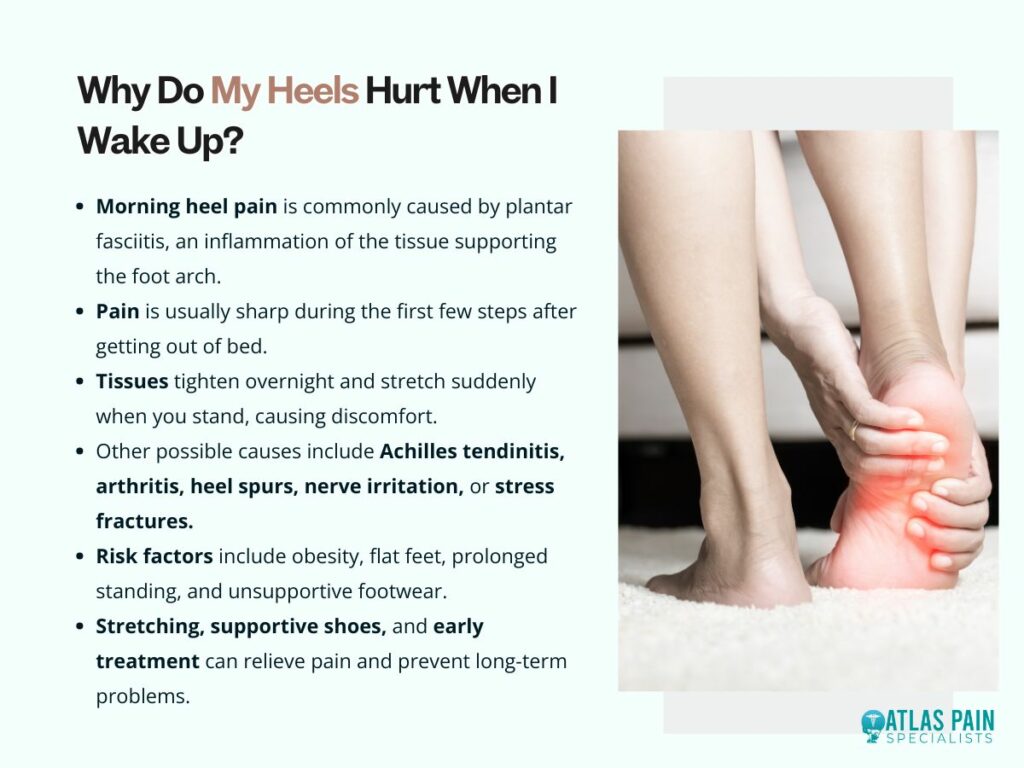
Understanding Morning Heel Pain
Morning heel pain usually occurs because tissues in the foot tighten during periods of rest and become stressed when weight is suddenly placed on them. During sleep, your feet remain relatively still for several hours. Tendons, ligaments, and connective tissues can shorten slightly while you rest. When you stand up and take your first steps, these tissues stretch abruptly, creating pain and stiffness.
This explains why many people notice a distinct pattern. The pain is intense when getting out of bed but decreases after several minutes of walking. Unfortunately, the discomfort often returns after sitting for long periods during the day.
The heel is designed to absorb significant force. Every step places pressure on the heel bone, surrounding tissues, and supporting structures. When inflammation develops, even normal walking can become painful.
While occasional soreness may result from overuse or an unusually active day, persistent morning heel pain often signals an underlying condition that deserves attention.
Plantar Fasciitis: The Most Common Cause of Morning Heel Pain
Plantar fasciitis is the leading reason people ask, "why do my heels hurt when I wake up?" The plantar fascia is a thick band of connective tissue that runs from the heel bone to the toes. It supports the arch of the foot and helps absorb shock during walking and running.
When this tissue becomes irritated or develops tiny tears, inflammation occurs.
Overnight, the plantar fascia tightens slightly. The first steps in the morning stretch the inflamed tissue, creating the characteristic sharp pain many people experience.
Common Symptoms of Plantar Fasciitis
- Sharp pain under the heel
- Pain that is worst with the first steps of the day
- Discomfort after long periods of sitting
- Heel tenderness when pressed
- Pain that improves somewhat with movement
Many people describe the sensation as stepping on a nail or experiencing a sudden stabbing pain beneath the heel.
Certain factors increase the risk of plantar fasciitis:
| Risk Factor | How It Contributes |
| Obesity | Increases pressure on the plantar fascia |
| Flat feet | Places additional strain on foot structures |
| High arches | Reduces shock absorption |
| Running or jumping sports | Repetitive stress on the heel |
| Standing for long hours | Constant strain on the fascia |
| Poor footwear | Insufficient support and cushioning |
Without treatment, plantar fasciitis can persist for months and sometimes become a long-term problem.
Other Conditions That Can Cause Heel Pain in the Morning
Although plantar fasciitis is common, several other conditions can cause similar morning heel pain. Accurate diagnosis matters because treatment varies depending on the underlying cause.
Achilles Tendinitis
The Achilles tendon connects the calf muscles to the heel bone. Repetitive stress can cause inflammation and stiffness, particularly in runners and active individuals.
People with Achilles tendinitis often notice:
- Pain at the back of the heel
- Morning stiffness
- Tenderness along the tendon
- Increased pain after activity
The discomfort typically improves as the tendon warms up but may worsen later in the day.
Heel Spurs
Heel spurs are bony growths that develop on the underside of the heel bone. While many heel spurs cause no symptoms, some contribute to pain when combined with plantar fasciitis.
The spur itself is not always the source of discomfort. Instead, the associated inflammation around the area often causes symptoms.
Arthritis
Several forms of arthritis can affect the feet and heels.
Conditions that may contribute include:
- Osteoarthritis
- Rheumatoid arthritis
- Psoriatic arthritis
- Reactive arthritis
Inflammation within joints and surrounding tissues can create morning stiffness and pain that gradually improves with movement.
Nerve Entrapment
Compressed nerves around the ankle or heel may cause pain, tingling, burning, or numbness.
Unlike plantar fasciitis, nerve-related pain often feels electrical or radiates into other parts of the foot. Symptoms may occur throughout the day rather than only during the first morning steps.
Stress Fractures
Small cracks in the heel bone can develop due to repetitive impact.
Athletes, military personnel, and individuals who suddenly increase activity levels may be at higher risk. Pain from a stress fracture typically worsens with activity and may persist even during rest.
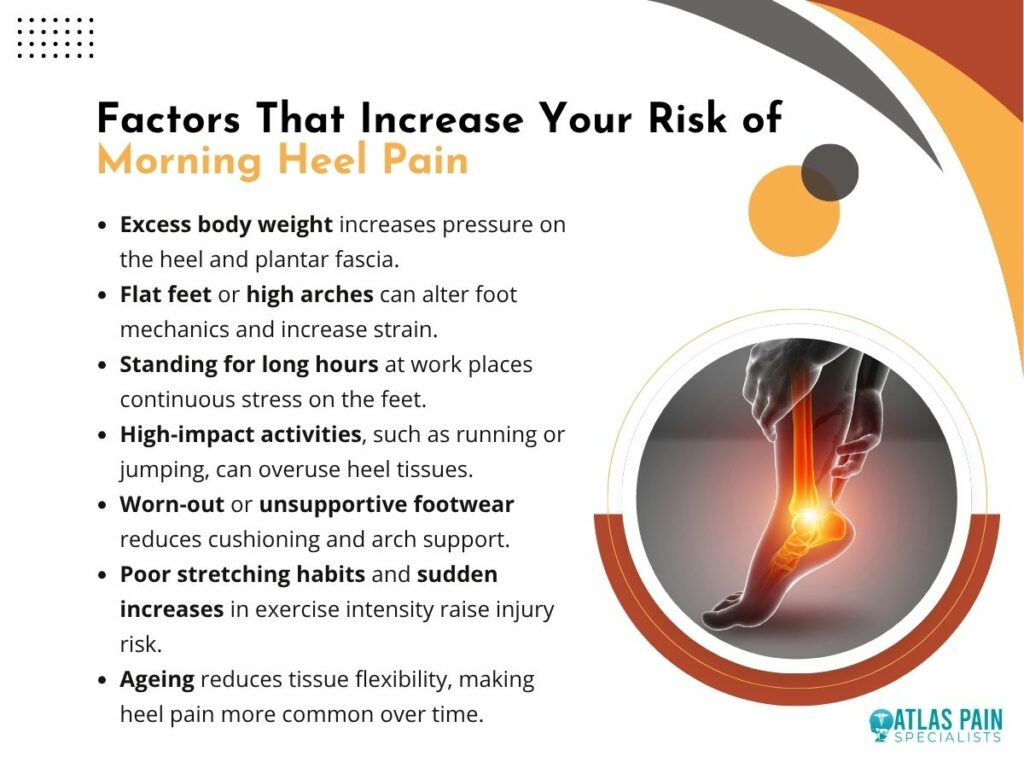
Factors That Increase Your Risk of Morning Heel Pain
Certain lifestyle and health factors make morning heel pain more likely to develop. Understanding these risk factors can help identify the root cause and prevent future problems.
Weight and Foot Mechanics
Excess body weight increases the load placed on the feet every day. Even modest weight gain can significantly increase pressure on the plantar fascia and heel structures. Over time, this additional stress contributes to inflammation and tissue breakdown.
Foot structure also matters. Both flat feet and high arches can alter weight distribution and create abnormal stress patterns.
Occupation and Daily Activities
People who spend long hours standing often develop heel pain more frequently than those who sit for most of the day.
High-risk occupations include:
- Teachers
- Nurses
- Factory workers
- Retail employees
- Construction workers
Repeated loading without adequate recovery can gradually damage supporting tissues.
Exercise Habits
Physical activity is beneficial, but sudden increases in intensity can strain the heel.
Common exercise-related contributors include:
- Running on hard surfaces
- Excessive jumping
- Poor training progression
- Worn-out athletic shoes
- Inadequate stretching
Many athletes first notice heel pain after increasing mileage or changing training routines.
Aging
As people age, the tissues supporting the foot naturally lose some elasticity and shock-absorbing capacity.
This makes inflammation and overuse injuries more likely. Morning heel pain becomes increasingly common after age 40, although younger individuals can certainly develop it as well.
How Doctors Diagnose the Cause of Heel Pain
A proper diagnosis helps determine why your heels hurt when you wake up and guides effective treatment. Diagnosis usually begins with a detailed medical history and physical examination.
A healthcare provider may ask:
- When the pain started
- Where the pain is located
- What activities worsen symptoms
- Whether pain improves with movement
- If numbness or tingling occurs
The location of pain often provides important clues. Pain underneath the heel frequently suggests plantar fasciitis, while pain at the back of the heel may indicate Achilles tendon problems.
In some cases, imaging studies are recommended.
| Diagnostic Tool | Purpose |
| X-rays | Identify fractures or heel spurs |
| Ultrasound | Evaluate soft tissue inflammation |
| MRI | Assess tendons, fascia, and bone injuries |
| Blood tests | Investigate inflammatory arthritis |
Most cases of plantar fasciitis can be diagnosed without advanced imaging, but additional testing may be needed when symptoms are unusual or persistent.
Effective Treatments for Morning Heel Pain
The good news is that most causes of morning heel pain improve with conservative treatment. Treatment focuses on reducing inflammation, improving flexibility, and addressing contributing factors.
Stretching Exercises
Stretching is often one of the most effective interventions.
Regular stretching can help:
- Lengthen the plantar fascia
- Improve calf flexibility
- Reduce morning stiffness
- Decrease tension on the heel
Many healthcare providers recommend stretching before getting out of bed to minimize pain during those first steps.
Supportive Footwear
Shoes play a major role in recovery.
Supportive footwear should provide:
- Arch support
- Adequate cushioning
- Shock absorption
- Stability
Walking barefoot on hard surfaces often worsens symptoms and should be limited during recovery.
Ice Therapy
Applying ice to the heel can help reduce inflammation. Many people find relief by rolling their foot over a frozen water bottle for 10 to 15 minutes. This combines icing with gentle stretching.
Orthotics and Inserts
Custom or over-the-counter orthotics can improve foot alignment and reduce strain on the plantar fascia. These devices help distribute pressure more evenly and provide additional support during daily activities.
Physical Therapy
Physical therapy may be recommended when symptoms persist.
Treatment often includes:
- Stretching programs
- Strengthening exercises
- Manual therapy
- Gait assessment
- Activity modification
Many patients experience significant improvement after following a structured rehabilitation plan.
When Morning Heel Pain Requires Medical Attention
Persistent heel pain should not be ignored, especially if symptoms continue despite home treatment. While many cases improve with conservative care, certain warning signs warrant prompt evaluation.
Seek medical attention if you experience:
- Severe pain that limits walking
- Sudden swelling
- Numbness or weakness
- Fever or redness
- Pain following a significant injury
- Symptoms lasting several weeks without improvement
Early treatment often prevents chronic problems and helps people return to normal activities more quickly. Ignoring ongoing pain can lead to compensatory walking patterns that create additional issues in the knees, hips, and lower back.
Preventing Future Heel Pain
Preventing recurring heel pain involves reducing stress on the foot while maintaining flexibility and strength. Simple daily habits can make a substantial difference.
Consider the following preventive strategies:
- Maintain a healthy weight
- Wear supportive footwear
- Replace worn athletic shoes regularly
- Stretch calves and feet daily
- Increase exercise intensity gradually
- Avoid prolonged barefoot walking on hard surfaces
Consistency matters more than intensity. Small preventive measures performed regularly often provide the greatest long-term benefit.
Conclusion
If you're wondering why do my heels hurt when I wake up, the answer is most often related to plantar fasciitis, although Achilles tendon issues, arthritis, nerve problems, and other conditions can also contribute.
Morning heel pain occurs because tissues tighten during rest and become stressed when you first place weight on your feet. While the discomfort can be frustrating, most cases respond well to stretching, supportive footwear, activity modifications, and other conservative treatments.
The key is addressing symptoms early rather than waiting for them to worsen. By identifying the underlying cause and following an appropriate treatment plan, most people can reduce pain, improve mobility, and start their mornings without those painful first steps.
About Dr. Sean Ormond

Dr. Sean Ormond is dual board-certified in Anesthesiology and Interventional Pain Management. He completed his anesthesia residency at Case Western University in Cleveland, Ohio where he served as Chief Resident, followed by an interventional pain management fellowship at Rush University in Chicago, IL. Following fellowship, Dr. Ormond moved to Phoenix and has been practicing in the Valley for a few years before deciding to start his own practice.