

New Location at 8406 E. Shea Blvd #100, Scottsdale 85260 - Accepting New Patients

Shoulder Pain from Sleeping on Side? Here Are Possible Reasons
Date: July 4, 2026
Shoulder pain from sleeping on your side can be caused by prolonged pressure on the shoulder joint, rotator cuff irritation, bursitis, shoulder impingement, poor alignment, or underlying conditions that affect the surrounding muscles and tissues. Spending hours in the same sleeping position may place excess stress on the shoulder, leading to pain, stiffness, and discomfort upon waking.
This article examines the possible causes of shoulder pain from sleeping on side. It includes associated risk factors, and symptoms that may require medical attention. It also covers treatment options, daytime physical therapy and preventive exercises, sleep position adjustments, and tips for choosing the best pillow for side sleepers.
Why Sleeping on Your Side Can Cause Shoulder Pain
Sleeping on your side is a common and comfortable position for many people, but it can place sustained pressure on the shoulder joint and surrounding tissues. Over time, this pressure may lead to irritation, inflammation, and discomfort, especially if proper support and alignment are lacking.
1. Increased Pressure on the Shoulder Joint
Sleeping on one side for several hours places much of your upper body weight directly on the shoulder joint. This constant pressure can compress soft tissues, reduce circulation, and contribute to soreness or stiffness upon waking.
2. Rotator Cuff Irritation
The rotator cuff muscles and tendons help stabilize the shoulder and support arm movement. Prolonged compression during sleep may irritate these structures, causing pain, tenderness, and discomfort that often becomes more noticeable at night.
3. Shoulder Impingement
Shoulder impingement occurs when tendons are pinched or compressed within the shoulder joint. Sleeping on the affected side can worsen this compression, leading to pain, reduced mobility, and difficulty finding a comfortable sleeping position.
4. Bursitis
Bursae are small fluid-filled sacs that cushion the shoulder and reduce friction between tissues. Continuous pressure from side sleeping can irritate these sacs, resulting in inflammation, tenderness, and aching that may persist throughout the day.
5. Poor Sleeping Alignment
Using an unsupportive pillow or sleeping in an awkward position can place excess strain on the shoulder, neck, and upper back. Poor alignment may increase muscle tension and joint stress, contributing to recurring shoulder pain over time.
6. Underlying Shoulder Conditions
Pre-existing conditions such as arthritis, tendinitis, frozen shoulder, or previous injuries can make the shoulder more sensitive to pressure during sleep. Side sleeping may aggravate these issues and intensify symptoms, particularly in individuals with chronic shoulder problems.
Although occasional shoulder discomfort from side sleeping is common, persistent or worsening pain may indicate an underlying condition that requires attention. Improving sleep posture, using proper support, and addressing existing shoulder issues can help reduce pain and promote more restful sleep.
Other Factors That May Contribute to Shoulder Pain
In addition to sleeping position, several underlying conditions and lifestyle factors can increase the risk of shoulder pain. These issues may make the shoulder more vulnerable to discomfort during sleep.
1. Previous Shoulder Injuries
Old injuries can weaken shoulder structures and make them more sensitive to pressure. Pain may return or worsen when sleeping on the affected side.
2. Arthritis
Arthritis causes joint inflammation and stiffness that can intensify during periods of inactivity. Sleeping on the shoulder may increase discomfort.
3. Tendinitis
Inflamed tendons are more susceptible to irritation from prolonged pressure. This can lead to pain that is especially noticeable at night.
4. Frozen Shoulder
Frozen shoulder restricts movement and causes persistent pain. Side sleeping may aggravate symptoms and reduce sleep quality.
5. Muscle Imbalances
Weak or tight muscles can alter shoulder mechanics and create added strain. This may contribute to pain and stiffness over time.
6. Age-Related Wear and Tear
Natural changes in joints and soft tissues can increase shoulder sensitivity. Older adults may be more likely to experience discomfort from side sleeping.
Identifying these contributing factors can help address the root cause of shoulder pain. Managing underlying conditions may improve comfort and support better sleep.
How to Prevent Shoulder Pain While Sleeping on Your Side
Making a few adjustments to your sleep habits can help reduce pressure on the shoulder and improve overall comfort. Proper support and positioning are key to preventing nighttime pain.
1. Use the Right Pillow
Choose a pillow that keeps your head, neck, and spine properly aligned. Adequate support helps minimize strain on the shoulder joint.
2. Hug a Pillow
Holding a pillow against your chest can support the upper arm and relieve pressure on the shoulder. This position may also improve body alignment.
3. Choose an Appropriate Mattress
A medium-firm mattress can provide a balance of comfort and support. It helps distribute body weight more evenly and reduces pressure points.
4. Alternate Sleeping Positions
Changing positions during the night can prevent prolonged pressure on one shoulder. Sleeping on your back occasionally may also provide relief.
5. Stretch Regularly
Gentle stretching exercises can improve flexibility and reduce muscle tension. Regular movement may help keep the shoulders healthy and mobile.
Simple changes to your sleep setup and daily routine can make a noticeable difference in shoulder comfort. Consistently practicing these habits may help prevent pain and promote better sleep quality.
When Shoulder Pain Could Signal a More Serious Problem
Occasional discomfort after sleeping awkwardly is common. However, certain symptoms may indicate a condition that requires medical attention.
Consult a healthcare provider if you experience:
- Severe or worsening pain
- Persistent pain lasting several weeks
- Significant weakness
- Limited shoulder movement
- Swelling or redness
- Pain following an injury
- Numbness extending into the arm or hand
Early diagnosis and treatment can help prevent minor issues from progressing into chronic conditions and support a faster recovery.
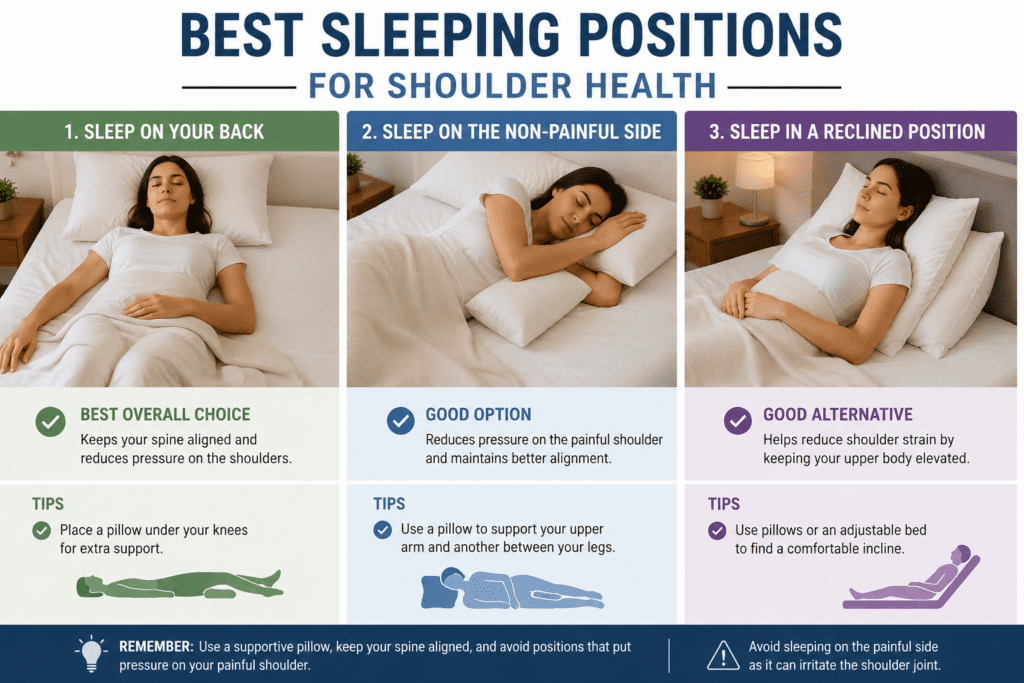
Best Sleeping Positions for Shoulder Health
The way you sleep can significantly affect shoulder comfort and overall joint health. Choosing supportive sleeping positions may help reduce pressure, improve alignment, and minimize nighttime pain.
1. Sleeping on Your Back
Sleeping on your back distributes body weight evenly and places less pressure on the shoulders. This position also helps maintain proper spinal alignment.
2. Side Sleeping with Support
Placing a pillow between your arms or hugging a pillow can help support the upper shoulder and reduce strain. It also promotes better alignment of the neck, shoulders, and spine.
3. Elevated Sleeping Position
Slightly elevating your upper body with pillows may help reduce pressure and inflammation in the shoulder joint. This position can be especially beneficial for people with shoulder impingement or bursitis.
Adopting a shoulder-friendly sleeping position can improve comfort and support better sleep quality. Combining proper positioning with supportive pillows and mattresses may further reduce the risk of shoulder pain.
How to Choose the Perfect Pillow for Side Sleepers
Your pillow can significantly impact shoulder health, especially for side sleepers. A pillow that is too high or too low may force the neck out of alignment, placing additional strain on the shoulders, surrounding muscles, and nerves extending into the arm.
| Pillow Characteristic | Recommended for Side Sleepers | Why It Matters |
| Pillow Loft (Height) | High loft (approximately 4–6 inches) | The pillow should fill the space between the neck and shoulder to help maintain proper spinal alignment throughout the night. |
| Material Firmness | Medium-firm materials such as memory foam or latex | Pillows that are too soft can flatten under the head's weight, causing the neck to tilt and increasing pressure on the shoulder joint. |
| Contour Design | Ergonomic or contoured pillows | Contoured designs support the natural curve of the neck and may help reduce stress on the shoulders and surrounding nerves. |
The ideal pillow should keep your head, neck, and spine in a neutral position while minimizing pressure on the shoulder. Choosing the right combination of height, firmness, and support can improve sleep quality and help prevent shoulder discomfort over time.
Daytime Physical Therapy and Preventive Exercises
Incorporating simple exercises into your daily routine can help strengthen the shoulder, improve mobility, and reduce discomfort caused by side sleeping. Regular movement may also prevent stiffness and support long-term shoulder health.
1. Pendulum Swings
This gentle exercise helps increase shoulder mobility and reduce joint stiffness. It is often recommended for easing mild shoulder discomfort.
2. Cross-Body Stretch
Bringing one arm across the chest helps stretch the muscles around the shoulder. This movement can improve flexibility and relieve tension.
3. Doorway Chest Stretch
Stretching the chest muscles may help improve posture and reduce strain on the shoulders. It can also counteract the effects of prolonged sitting.
4. Shoulder Blade Squeezes
Pinching the shoulder blades together strengthens the upper back muscles and promotes better alignment. This exercise may help reduce stress on the shoulder joint.
5. Resistance Band Rotations
Light resistance exercises can strengthen the rotator cuff muscles and improve shoulder stability. They may also help lower the risk of future injuries.
6. Posture Awareness Exercises
Practicing proper posture throughout the day helps keep the shoulders in a healthier position. Good alignment can reduce unnecessary pressure and muscle tension.
Performing these exercises consistently can improve shoulder function and support better sleep comfort. If pain persists or worsens, consult a healthcare professional or physical therapist for personalized guidance.
Simple Lifestyle Habits to Support Shoulder Health
Daily habits can affect shoulder comfort and may help prevent recurring pain. Small adjustments throughout the day can reduce strain and support joint health.
- Take Regular Movement Breaks - Avoid staying in one position for extended periods. Gentle movement helps reduce stiffness and maintain flexibility.
- Maintain Good Posture - Proper posture keeps the shoulders aligned and reduces unnecessary stress on the joint.
- Avoid Carrying Heavy Bags on One Side - Repeatedly carrying heavy loads on one shoulder can increase strain and contribute to discomfort.
- Stay Physically Active - Regular exercise strengthens the muscles that support the shoulders and promotes better mobility.
Simple lifestyle changes can complement healthy sleep habits and preventive exercises. Over time, they may help reduce shoulder pain and improve overall shoulder health.
Final Thoughts
Shoulder pain caused by sleeping on your side is commonly linked to prolonged pressure on the joint, poor sleeping posture, or pre-existing shoulder issues. Understanding the underlying cause and making targeted changes to your sleep setup can help ease discomfort and promote more restful sleep.
Choosing the right pillow, improving sleep positioning, and staying active with regular stretching and strengthening exercises can support long-term shoulder health. However, persistent or worsening pain should be evaluated by a healthcare professional to identify any underlying conditions and determine the most appropriate treatment approach.
About Dr. Sean Ormond

Dr. Sean Ormond is dual board-certified in Anesthesiology and Interventional Pain Management. He completed his anesthesia residency at Case Western University in Cleveland, Ohio where he served as Chief Resident, followed by an interventional pain management fellowship at Rush University in Chicago, IL. Following fellowship, Dr. Ormond moved to Phoenix and has been practicing in the Valley for a few years before deciding to start his own practice.