New Location at 8406 E. Shea Blvd #100, Scottsdale 85260 - Accepting New Patients
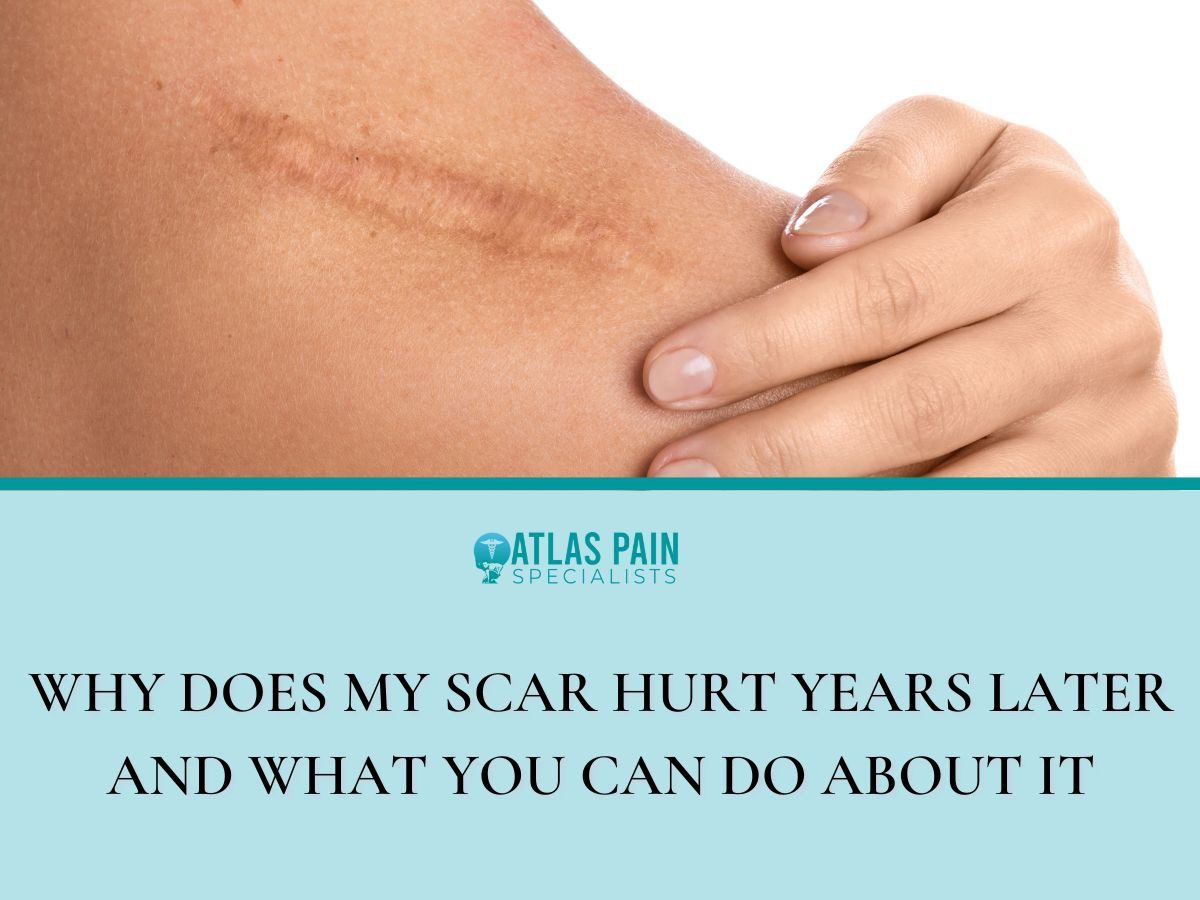
Why Does My Scar Hurt Years Later and What You Can Do About It
Date: February 6, 2026
An old scar that begins to hurt feels like a ghost from a wound you thought had finished healing. The tissue is no longer an open injury, yet it sends a clear message that something beneath the surface is not at rest.
This late-onset pain signals altered tissue that now behaves differently from the surrounding skin and muscle. The original injury severed blood vessels and nerve endings, forcing the body to weave a hasty bridge of collagen fibers to close the gap.
The scar is disorganized and less elastic than the tissue it replaced, creating a fixed point that cannot move normally. As surrounding muscles tighten with age or new physical demands arise, that rigidity becomes a source of radiating tension and pain. Why does my scar hurt years later and what you can do about it? Let's look into it.
The Main Reasons for Old Scar Pain
Nerve endings trapped within that fibrous patch can misfire, generating sharp sensations or a deep, persistent ache as they respond to pressure or chemical changes in the environment. The scar tissue itself may even develop trigger points, acting as a knot that refers pain to distant parts of the body.

- The Nerve Reorganization Process
A deep cut or surgical incision does not simply divide skin. It severs the intricate network of sensory nerves that branch through the tissue.
During healing, the body works to seal the wound, but the nerve ends do not always reconnect in an orderly fashion. They can form what doctors call a neuroma, a tangled cluster of sprouting nerve fibers trapped within the collagen of the scar.
This disorganized nerve tissue becomes highly sensitive to mechanical pressure. A light brush of clothing or a change in the weather can compress these trapped endings, which then fire off signals interpreted by the brain as pain.
The sensation can present as a sharp electric shock, a persistent burning feeling, or the odd pins-and-needles prickle that radiates out from the scar line. These nerves can remain dormant for years before some new stimulus finally triggers them.
- The Adhesion of Deeper Layers
Scar tissue does not confine itself to the surface. It extends downward, binding the skin to the layers of fat, fascia, and muscle beneath it.
This binding creates adhesions, which anchor the skin firmly to the structures underneath. Normal tissue slides and glides with body movement; an adhesion pulls and tugs.
When you bend a joint or stretch a muscle near an old scar, that anchored spot cannot move with the rest of the body. The tension concentrates directly on the scar, creating a sharp pulling sensation or a deep ache.
This is why a scar on the lower back might throb after a day of bending or why a scar near the shoulder can make reaching for a high shelf unexpectedly painful. The adhesion turns every stretch of the surrounding tissue into a direct pull on the scar itself.
- The Collagen Structure Disorganization
Healthy skin contains collagen woven in a basket-weave pattern, which provides strength and flexibility. A scar forms rapidly, with the body laying down collagen in thick, parallel bundles to close the wound quickly.
This structure resembles a mound of hastily stacked sticks rather than a woven basket. The parallel alignment creates a patch of tissue that is significantly less elastic than the surrounding dermis.
It cannot deform and rebound under stress. When the body moves, the rigid scar tissue acts as a stress riser, a point where force concentrates rather than dissipates.
- The Latent Inflammatory Response
Inflammation is the initial step of wound healing, a cascade of cellular activity that cleans the injury and builds new tissue. In some cases, this inflammatory process does not fully switch off.
It can settle into a low-grade, chronic state within the scar tissue, flaring up years later under the right conditions. Minor trauma to the area, such as a bump or a hard workout, can reactivate these latent immune cells.
The body may respond as if the original wound has been reopened, flooding the site with chemicals that cause swelling and tenderness. This explains why an old scar can suddenly become puffy, red, or sore to the touch for no apparent reason, only to settle down again after a period of rest.
Everyday Things That Can Flare Up a Scar
The scar on your body is not a static monument to an old injury. It is living tissue that responds to how you move, how you sit, and how you care for it.

The pain it produces is a signal worth listening to, and with the right approach, it is a signal you can quiet.
- Weather Shifts and Atmospheric Pressure
The dense, fibrous tissue of a scar does not respond to atmospheric changes in the same way as normal skin. When barometric pressure drops before a storm, the surrounding tissues expand slightly.
The effect is most pronounced during cold weather, as low temperatures can also cause muscles to tense and contract.
- A drop in humidity can dry out the scar tissue itself, making it less pliable and more prone to cracking or irritation.
- Many individuals report that their scars serve as reliable predictors of rain, aching hours before any precipitation falls.
The scar tissue, with its tight collagen structure, cannot expand with them. This discrepancy creates a physical pull on the nerve endings embedded within the scar.
- Repetitive Motion and Physical Stress
A scar that has been quiet for years can suddenly protest when introduced to a new pattern of movement. The tissue has adapted to a certain range of motion, a specific set of daily demands.
When that range is exceeded or changed, the scar becomes the weakest link in the kinetic chain.
- Starting a new exercise routine, such as running or weightlifting, can place unfamiliar tensile forces on an old scar.
- Occupational tasks that require repetitive bending, lifting, or twisting can gradually irritate the adhesion points.
Even a change in posture or gait, perhaps from a new pair of shoes or a minor back injury, can alter how the tissue around the scar is pulled throughout the day.
- Prolonged Periods of Inactivity
Sitting at a desk or lying in bed for extended hours allows the tissues to settle into a static position. Muscles shorten, fascia tightens, and the scar tissue loses the small amount of movement it normally experiences.
When a person finally stands up and moves, the sudden stretch on these shortened structures pulls sharply on the scar. This explains the common complaint of pain upon standing after a long car ride or a night of sleep.
The scar and the tissue around it have essentially stiffened in place. The first movement of the day or after a long rest requires the scar to stretch abruptly, which it cannot do without signaling pain.
- Psychological Stress and Muscle Tension
The body holds emotional tension in specific muscle groups, commonly the jaw, the neck, the shoulders, and the lower back. If a scar resides in one of these high-tension zones, it becomes a passive recipient of that stress.
The brain may send a signal to brace for a stressful situation, which causes the muscles to contract around the scar.
- Chronic anxiety can lead to a permanent state of low-level muscle tension, constantly pulling on the scar tissue.
- During periods of high stress, individuals may also unconsciously touch or rub the area, adding mechanical irritation to the existing muscle tension.
The scar can become a somatic focal point, a physical location where the psychological state manifests as tangible discomfort.
- Nutritional and Hydration Changes
The health of all tissue, including scar tissue, depends on adequate hydration and nutrition. When the body becomes dehydrated, every tissue loses some of its fluid content.
Skin loses elasticity, and the dense collagen of a scar becomes even more rigid and brittle.
- A diet low in essential fatty acids can impair the tissue's natural lubrication, making scars feel tighter.
- Deficiencies in vitamins C and D, which play roles in collagen maintenance, can affect the structural integrity of the scar matrix.
Significant weight gain or loss can stretch or shrink the skin around a scar, changing the tension dynamics and irritating the fixed point of the scar tissue.
How to Find Relief
Some resist home treatment. They hold their tightness or generate pain that spreads beyond their borders.
In these cases, professional help offers tools that go deeper than what the fingers can provide. A physical therapist or physician can identify the specific structures involved and apply treatments that break the cycle of chronic irritation.
- Daily Mobilization Techniques
The goal of scar mobilization is to restore movement between the layers of tissue that have become glued together. This requires direct, manual intervention to break the adhesions and encourage the collagen fibers to realign in a more flexible pattern.
The skin over a healthy scar should move freely over the muscle and fascia beneath it.
- Use the pads of two or three fingers to locate the tightest spot along the scar line.
- Press down gently until you feel resistance, then move the skin in small circles clockwise and counterclockwise.
- Pinch the scar between thumb and forefinger and lift it away from the underlying muscle, holding for a few seconds before releasing.
- Stretch the skin on either side of the scar in opposite directions, creating a transverse pull across the scar line.
These movements should be performed daily for several minutes. The sensation should be one of firm pressure and stretching, not sharp pain. Over time, this mechanical stress signals the fibroblasts to remodel the collagen into a more organized, flexible structure.
- Directed Stretching Protocols
A scar that crosses a joint or lies over a major muscle group requires specific stretching to maintain range of motion. The stretch must target the tissue planes that the scar has tethered, lengthening them gradually to reduce tension.
Without this directed input, the scar will continue to act as a brake on normal movement.
- Identify the movements that reproduce the pulling sensation around the scar.
- Move the joint or muscle slowly to the point where the pull is felt, then hold the position for a slow breath.
- Inhale deeply, and on the exhale, attempt to move just slightly further into the stretch.
- Repeat this cycle several times, allowing the tissue to relax incrementally with each breath.
Consistency matters more than intensity with this approach. A gentle, sustained stretch performed daily produces better long-term results than an aggressive stretch performed occasionally.
- Thermal Therapy Application
Temperature manipulation can alter the mechanical properties of scar tissue and the muscle tension around it. Heat and cold serve different purposes and should be selected based on the specific quality of the pain.
Apply a warm compress or heating pad to the area before mobilization or stretching. The heat increases blood flow and makes the collagen fibers more pliable, allowing for greater movement with less risk of irritation.
Use a warm soak in a bath to heat a large area around the scar, relaxing all the surrounding muscles at once. Apply an ice pack or a cold gel pack to the scar after activity if it feels hot, throbbing, or acutely irritated.
Conclusion
An old scar that hurts is a logical consequence of the body's remarkable but imperfect repair process. The tissue bridging the original wound lacks the elasticity and organization of healthy skin, and it responds to tension, weather, and movement in predictable ways.
The pain serves as a messenger, indicating that something in that local environment has changed or reached a limit. The path to relief begins with recognizing that the scar remains an active part of the body's mechanical system.
It can be stretched, mobilized, and hydrated. It can adapt to new demands if given the right input over time. Simple daily attention to the tissue often produces gradual but lasting improvement, returning the scar to a state of quiet function.
About Dr. Sean Ormond

Dr. Sean Ormond is dual board-certified in Anesthesiology and Interventional Pain Management. He completed his anesthesia residency at Case Western University in Cleveland, Ohio where he served as Chief Resident, followed by an interventional pain management fellowship at Rush University in Chicago, IL. Following fellowship, Dr. Ormond moved to Phoenix and has been practicing in the Valley for a few years before deciding to start his own practice.