

New Location at 8406 E. Shea Blvd #100, Scottsdale 85260 - Accepting New Patients
What Not to Take Before an Epidural Injection?
Date: March 2, 2026
The decision to receive an epidural injection, whether for labor analgesia or surgical anesthesia, requires a clear understanding of the preparatory steps involved. The medications and substances present in your body directly influence the safety and efficacy of the procedure.
Anesthesiologists must have a complete picture of your recent intake to mitigate risks such as bleeding complications or adverse drug interactions. Patient cooperation with pre-procedural guidelines is a critical component of anesthetic safety.
What not to take before an epidural injection? Certain common foods, supplements, and medications can directly counteract the body's natural clotting mechanisms or alter its response to emergency medications. Failure to observe these restrictions may result in the postponement of the procedure for medical reasons.
1. Blood Thinning Medications and Supplements
An epidural injection requires precise placement into a space housing delicate blood vessels. The needle or catheter can inadvertently puncture one of these vessels during the procedure. A substance that inhibits the blood's ability to clot increases the risk of a significant bleed in this confined area.
Such an event, though rare, can lead to compression of spinal nerves and requires immediate medical intervention. The anesthesiologist must have a complete and accurate list of everything the patient has ingested in the days prior.
Prescription Anticoagulants
Patients prescribed medications to prevent thrombosis or manage cardiac conditions must follow specific timing protocols. These drugs are designed specifically to alter the clotting cascade and cannot be combined safely with an epidural.
- Warfarin (Coumadin): This medication requires several days for the effects to diminish after the last dose.
- Clopidogrel (Plavix): This antiplatelet drug impairs platelet function for the lifespan of the platelet itself.
- Enoxaparin (Lovenox): This injectable anticoagulant has a shorter duration of action but still requires precise timing.

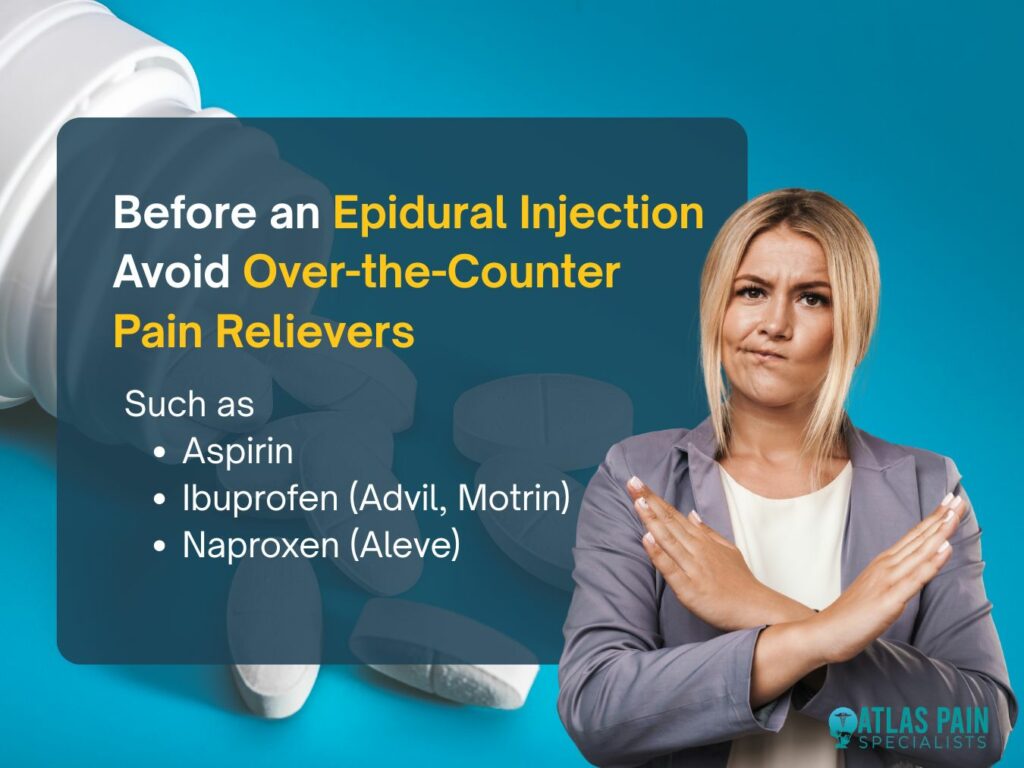
Over-the-Counter Pain Relievers
Non-prescription pain medications are common household items that many people take without a second thought. These drugs can have profound effects on platelet activity and bleeding time.
- Aspirin: This drug permanently inhibits platelet function for the cell's entire lifespan.
- Ibuprofen (Advil, Motrin): These nonsteroidal anti-inflammatory drugs (NSAIDs) interfere with platelet function temporarily.
- Naproxen (Aleve): This longer-acting NSAID remains in the system for an extended period compared to ibuprofen and requires careful consideration regarding the timing of the last dose.
Herbal Supplements and Natural Products
The herbal supplement market is not regulated with the same rigor as pharmaceutical drugs regarding purity and potency. Many of these products contain active compounds that directly affect coagulation or platelet aggregation.
- Garlic: High doses of garlic can inhibit platelet aggregation and prolong bleeding time. Its effect can be significant enough to be problematic in combination with other factors.
- Ginkgo Biloba: This supplement is known to inhibit platelet-activating factor. Several case reports have linked ginkgo use to spontaneous bleeding events.
- Fish Oil (Omega-3 Fatty Acids): High doses of fish oil can reduce platelet aggregation. Patients are often advised to discontinue these supplements a few days before the procedure.
- Ginseng: This herb can affect both clotting time and the efficacy of other anticoagulant medications the patient may be taking.
The standard recommendation involves discontinuing these products for a period of one to two weeks prior to the scheduled epidural to ensure complete clearance from the system.

2. Heavy Meals and Large Amounts of Food
The presence of solid food in the stomach during an epidural placement presents a specific physiological danger. An epidural is most often used for procedures where the patient remains awake, but the clinical situation can change without warning.
Anesthesiologists manage the airway with the assumption that the stomach may contain food particles. These solid particles can migrate from the stomach into the lungs if protective reflexes are lost.
The resulting chemical injury to the lung tissue, known as aspiration pneumonitis, carries significant morbidity. The fasting period exists specifically to reduce the volume and acidity of stomach contents.
Specific Fasting Guidelines
The American Society of Anesthesiologists provides standardized fasting recommendations for elective procedures. These guidelines apply to patients of all ages undergoing anesthesia or sedation.
The times listed represent minimum intervals and may be extended based on individual patient factors or facility policies.
| Ingested Material | Minimum Fasting Period |
| Clear liquids (water, clear juice, black coffee) | 2 hours |
| Breast milk | 4 hours |
| Infant formula | 6 hours |
| Non-human milk (cow, goat) | 6 hours |
| Light meal (toast, clear soup) | 6 hours |
| Full meal (fried foods, fatty meat) | 8 hours or longer |
The counting of the fasting period begins at the time of ingestion, not at the time the meal concludes. A patient who finishes a heavy meal at midnight should not undergo an epidural procedure before 8:00 AM at the earliest.
Consequences of Non-Compliance
Scheduled procedures may be delayed or canceled entirely if a patient admits to eating outside the fasting window. This cancellation occurs not as a punishment but as a risk mitigation strategy.
The surgical team cannot safely proceed when the risk of aspiration outweighs the benefits of the planned intervention. Patients who do not disclose their recent food intake place themselves at serious medical risk.
The anesthesiologist may proceed with the case under false pretenses, believing the airway to be protected. Emergency airway management in a patient with a full stomach is technically difficult and carries a higher rate of complications including hypoxia and cardiac events.
3. Drinks and Fluids Before the Procedure
The rules governing liquid intake differ significantly from those applied to solid food. Clear fluids empty from the stomach rapidly, typically within one to two hours, which creates a different risk profile.
The stomach treats a glass of water much differently than it treats a cheeseburger. The purpose of allowing certain fluids while restricting others relates directly to gastric emptying rates and particulate matter.
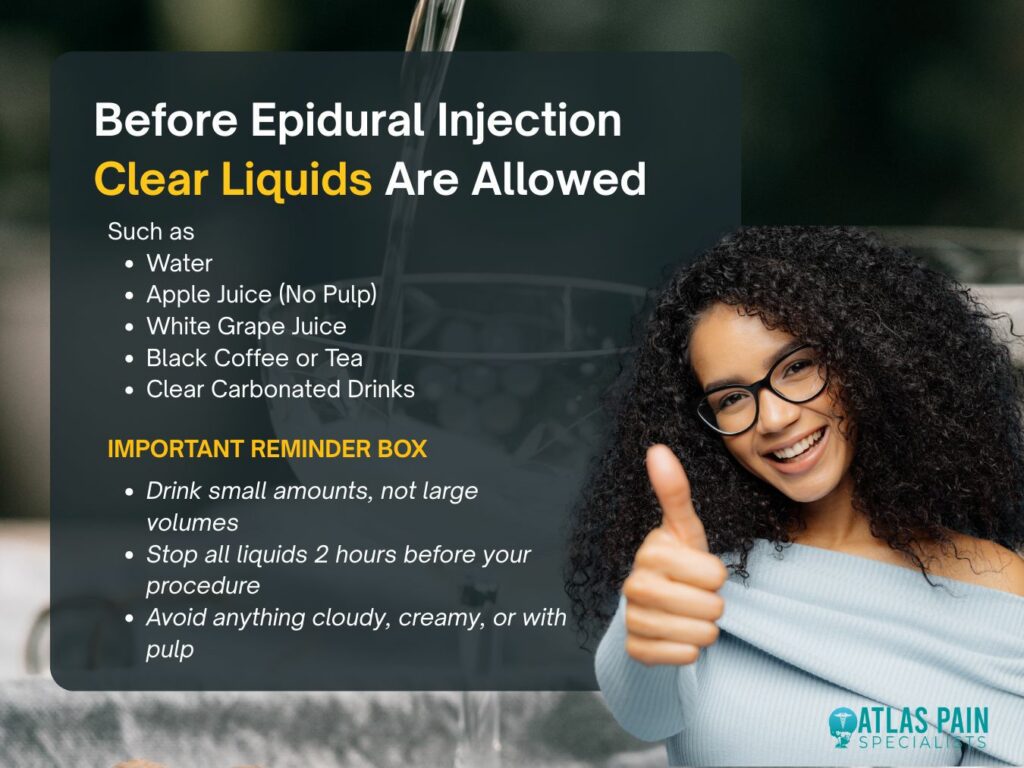
Clear Liquids
Clear liquids are defined by their transparency at room temperature and their lack of solid content. These beverages leave the stomach rapidly and do not require digestion before absorption.
The two-hour fasting rule for clear liquids allows patients to remain hydrated and comfortable before a procedure.
- Water: Plain water represents the safest option and can be consumed in small amounts up to two hours before the procedure.
- Apple juice: This juice lacks pulp and passes through the stomach similarly to water despite its sugar content.
- White grape juice: Like apple juice, this option contains no particulate matter and leaves minimal gastric residue.
- Black coffee or tea: Coffee consumed without milk, cream, or nondairy creamer qualifies as a clear liquid.
- Clear carbonated beverages: Sprite, ginger ale, and seltzer water are acceptable if they are free of pulp or coloring agents.
Patients should limit these fluids to small volumes rather than drinking large quantities right up to the cutoff time.
Problematic Beverages
Many beverages appear harmless but contain components that convert them into solid food equivalents inside the stomach. The stomach must process proteins and fats from dairy products before emptying can occur.
Sugary liquids with high osmolality can also delay gastric emptying compared to plain water.
- Milk and cream: Dairy products contain casein and whey proteins that coagulate in the acidic stomach environment.
- Fruit smoothies: These drinks contain fiber, seeds, and pulp that require mechanical and enzymatic breakdown.
- Orange juice with pulp: Even small amounts of pulp represent particulate matter that can obstruct the airway if aspirated.
- Protein shakes: These formulated beverages often contain thickeners and protein isolates that behave like a light meal.
- Alcoholic beverages: Alcohol irritates the gastric mucosa and can affect patient cooperation and consent.
A patient who drinks orange juice with pulp has effectively eaten oranges. The stomach cannot distinguish between chewed fruit and blended fruit once the material arrives for processing.
Hydration and Medication Swallowing
Patients frequently require sips of water to take essential medications on the morning of a procedure. This practice is generally acceptable and does not violate fasting protocols when performed correctly.
The anesthesiologist needs to know about any medications taken and the volume of water consumed.
- Essential medications: Blood pressure medications, thyroid replacements, and seizure drugs should typically be taken as scheduled.
- Small sips: One or two ounces of water to facilitate swallowing does not significantly increase gastric volume.
- Timing: Medications should be taken at least two hours before the procedure when possible to allow gastric emptying.
Patients should verify medication instructions with their physician rather than making assumptions about safety. Some medications interact with anesthetic agents or affect coagulation in ways that require special consideration.
4. Unfamiliar or Recreational Substances
The anesthesiologist administers epidural medications with a specific dose-response relationship in mind. Recreational drugs introduce unpredictable variables into this equation, as their composition and potency remain unknown.
A patient's system may contain substances that amplify, diminish, or dangerously interact with the standard anesthetic agents. These interactions can manifest during the procedure or emerge during the recovery period.
Drug Interactions and Anesthetic Complications
Recreational substances exert their effects through various neurotransmitter systems and receptor pathways. These neurochemical alterations do not simply disappear when anesthetic agents are introduced.
The resulting combination can produce cardiovascular instability, respiratory depression, or prolonged sedation.
- Stimulants (cocaine, methamphetamine, MDMA): These drugs increase circulating catecholamines and can cause severe hypertension or cardiac arrhythmias when combined with certain anesthetics.
- Opioids (heroin, fentanyl, prescription pain relievers): Chronic opioid use leads to tolerance and may render standard epidural analgesia ineffective.
- Cannabis: Regular cannabis users often require higher doses of sedatives and anesthetics to achieve the desired effect.
- Benzodiazepines (Xanax, Valium obtained illicitly): These drugs potentiate the effects of anesthetic agents and can lead to prolonged sedation and respiratory depression.
- Hallucinogens (LSD, psilocybin): These substances can alter perception and may contribute to emergence delirium or panic during the procedure.
The anesthesiologist adjusts medication selection and dosing based on the substances present in the patient's system. This adjustment cannot occur without accurate information about recent use.
Disclosure and Safety
The preoperative period represents the ideal time for honest discussion regarding substance use. Patients who fear judgment or legal consequences should understand that medical privacy laws protect their information.
The anesthesia team does not contact law enforcement or report lawful medical information to outside agencies.
- Direct questioning: The anesthesiologist asks about substance use specifically to plan a safe anesthetic, not to interrogate the patient.
- Timing matters: Information about recent use, particularly within the last 24 to 48 hours, carries the greatest significance for anesthetic planning.
- Withdrawal risk: Patients dependent on alcohol, opioids, or benzodiazepines may experience withdrawal during the perioperative period if this information remains undisclosed.
The anesthesia team can provide medications to prevent withdrawal symptoms and ensure patient comfort. Undisclosed substance use eliminates this possibility and forces the medical team to react to symptoms rather than prevent them.
Conclusion
An epidural injection requires careful preparation that extends beyond simply arriving at the hospital on time. The substances a patient introduces into their body or applies to their skin directly influence the safety and success of the procedure.
Patients who follow preoperative instructions provide the anesthesiologist with optimal conditions for needle placement. Clear communication regarding all medications, supplements, and substances ensures accurate dosing and appropriate agent selection.
Safe outcomes depend on the partnership between patient and physician during the preparation phase. The information provided here represents general guidelines that apply to most patients in most situations.
About Dr. Sean Ormond

Dr. Sean Ormond is dual board-certified in Anesthesiology and Interventional Pain Management. He completed his anesthesia residency at Case Western University in Cleveland, Ohio where he served as Chief Resident, followed by an interventional pain management fellowship at Rush University in Chicago, IL. Following fellowship, Dr. Ormond moved to Phoenix and has been practicing in the Valley for a few years before deciding to start his own practice.