

New Location at 8406 E. Shea Blvd #100, Scottsdale 85260 - Accepting New Patients
Strategies for Parenting a Child with Chronic Pain
Date: February 27, 2026
When your child lives with ongoing pain, parenting begins to look very different from what you once imagined. School mornings may feel uncertain. Sleep can become inconsistent. Plans often revolve around flare ups rather than calendars. Parenting a child with chronic pain means learning how to support physical comfort while also protecting emotional wellbeing and long term independence.
The goal is not simply to eliminate discomfort, but to help your child function, grow, and build resilience despite it. With structure, informed medical care, and intentional parenting strategies, families can create stability even when symptoms are unpredictable. Let's look at strategies for parenting a child with chronic pain.
Understanding Chronic Pain in Children
Chronic pain in children is typically defined as pain lasting longer than three months. It may be associated with conditions such as migraines, juvenile idiopathic arthritis, functional abdominal pain disorders, inflammatory conditions, or sickle cell disease. In many cases, pain persists even after the original injury or illness has healed.
The Centers for Disease Control and Prevention notes that chronic health conditions affect a significant number of children in the United States, and persistent pain is one of the most challenging symptoms families face.
Chronic pain is not simply prolonged discomfort. It involves changes in how the nervous system processes pain signals, which can make the body more sensitive over time. This means that even minor triggers may feel intense. The pain is real, even when imaging or laboratory results appear normal.
Children express pain differently depending on their age and personality. Younger children may become irritable, clingy, or withdrawn. School aged children may avoid activities they once enjoyed. Teenagers may struggle with mood changes or social isolation. Recognizing these behavioral shifts helps parents respond with empathy instead of frustration.
Common Pediatric Chronic Pain Conditions
Some commonly diagnosed conditions include:
- Chronic migraines or tension headaches
- Juvenile idiopathic arthritis
- Functional abdominal pain disorders
- Sickle cell related pain crises
Although the medical causes differ, the daily impact often overlaps. Children may miss school, struggle with sleep, avoid sports, or withdraw from friendships. Over time, these disruptions can affect confidence and academic progress.
Understanding the condition itself is only the first step. The next challenge is building a home environment that supports both healing and normal development.
Creating Stability in an Unpredictable Situation
When pain levels change from day to day, structure becomes incredibly important. A predictable routine reduces stress, and stress can increase pain sensitivity. The American Academy of Pediatrics emphasizes the importance of maintaining daily function and normal routines as part of pediatric chronic pain care.
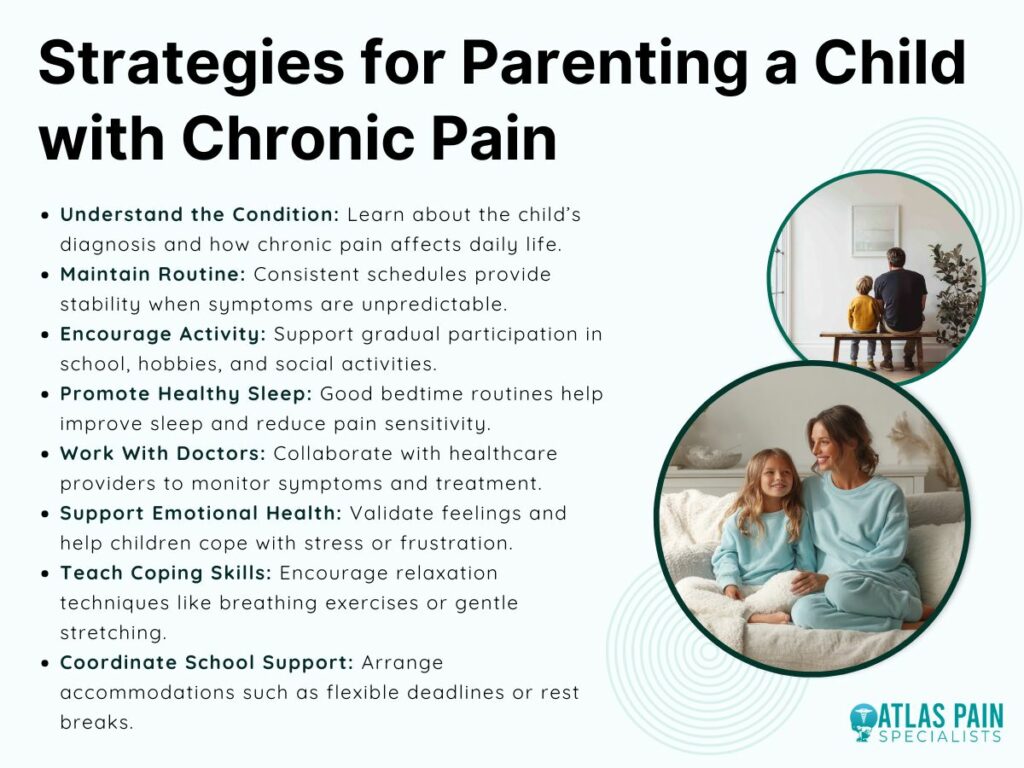
Consistency in daily structure provides children with a sense of control when their bodies feel unpredictable. Establish regular times for waking, meals, homework, and bedtime. Even if adjustments are occasionally necessary, the routine itself offers reassurance.
A written pain action plan can also reduce uncertainty. This plan may include early warning signs of flare ups, preferred coping strategies, medication timing, and clear guidelines on when to contact a healthcare provider. Having this plan visible in the home removes guesswork during stressful moments.
Encouraging Activity Without Overprotection
One of the most difficult balances in parenting a child with chronic pain is knowing when to push gently and when to step back. It is natural to want to shield your child from discomfort. However, complete avoidance of activity can unintentionally increase disability and fear.
Encourage gradual participation in school, social events, and hobbies. Modifications may be necessary. A child with joint pain might choose swimming instead of contact sports. A teen with migraines may require scheduled rest breaks during school.
Instead of asking whether something hurts too much to try, consider asking what would make the activity manageable. This small language shift promotes problem solving rather than avoidance.
Supporting Restorative Sleep
Sleep and pain are closely connected. Inconsistent sleep can heighten pain sensitivity, while chronic pain can disrupt sleep cycles. Establishing calming bedtime routines is critical. Limit screen exposure before bed, maintain consistent sleep and wake times, and create a quiet environment.
Healthy sleep supports hormonal regulation, immune function, and emotional stability. Even small improvements in sleep hygiene can positively influence overall pain management.
Working Effectively With Healthcare Providers
Chronic pain often requires a multidisciplinary approach. Pediatricians may coordinate care with pain specialists, physical therapists, psychologists, or other specialists depending on the diagnosis. The National Institute of Neurological Disorders and Stroke supports comprehensive approaches that address both physical and psychological components of pain.
Open communication with healthcare providers turns uncertainty into informed decision making. Keep a detailed record of pain episodes, triggers, sleep patterns, and medication effects. Patterns often emerge over time, helping providers refine treatment strategies.
As children grow older, encourage them to participate in appointments. Adolescents especially benefit from practicing how to describe symptoms and ask questions. This builds confidence and prepares them for adult healthcare systems later in life.
Common Components of Treatment
Treatment typically combines several strategies rather than relying on a single solution.
| Treatment Approach | Purpose | Benefit | Consideration |
| Medication | Reduce inflammation or nerve sensitivity | May decrease flare intensity | Requires monitoring |
| Physical Therapy | Improve mobility and strength | Supports long term function | Needs consistency |
| Psychological Support | Build coping strategies | Reduces fear and anxiety around pain | Works best with family support |
| Lifestyle Adjustments | Improve sleep, stress control, nutrition | Supports overall regulation | Requires daily commitment |
This integrated model recognizes that chronic pain affects the whole child, not just one body part.
Navigating School Accommodations
Children with persistent pain may experience increased school absences. Without a plan, this can lead to academic stress and social isolation.
Meet with school administrators to discuss possible accommodations. These might include flexible deadlines, modified physical education requirements, rest breaks, or access to the school nurse. Clear communication prevents misunderstandings and ensures your child feels supported rather than punished for a medical condition.
Gradual return to full participation after prolonged absences can also ease anxiety. A phased schedule may help rebuild stamina and confidence.
Supporting Emotional Health
The emotional toll of chronic pain can be significant. Frustration, anxiety, sadness, and even anger are common responses. When children feel different from peers, isolation may follow.
Validating your child’s emotional experience strengthens resilience and prevents long term withdrawal. Avoid minimizing statements, even if they are meant to comfort. Instead, acknowledge feelings and collaborate on coping strategies.
Teaching Coping Tools
Children benefit from learning practical self regulation skills. Deep breathing, progressive muscle relaxation, guided imagery, journaling, and gentle stretching are common tools. Some families create a comfort corner at home with heating pads, soft blankets, or calming music.
Encourage your child to reflect on what has helped during past flare ups. Over time, this builds a sense of mastery. The message becomes clear: pain may occur, but there are strategies available.
Peer support groups, whether in person or virtual, can also reduce isolation. Connecting with others who understand chronic illness helps normalize the experience.
Considering Family Dynamics
Chronic illness affects siblings and caregivers as well. Brothers and sisters may feel overlooked or confused. Open conversations about fairness and emotional needs are important.
Schedule individual time with siblings when possible. Even brief, focused attention reinforces their importance within the family system. Including them in age appropriate discussions about the condition can also reduce misconceptions.
Preparing for Long Term Independence
As children move into adolescence, the focus gradually shifts toward self management. Teaching teens to track medications, schedule appointments, and understand their condition builds independence.
Transitioning from full parental control to guided independence is a gradual but essential process. Allow teens to take increasing responsibility under supervision. Encourage them to communicate directly with teachers and healthcare providers.
Planning for college or employment may involve exploring accommodations or flexible scheduling options. With preparation, many young adults with chronic pain pursue higher education and meaningful careers.
Financial considerations may also arise over time. Consulting with insurance representatives or hospital social workers can provide clarity about coverage and long term planning.
Caring for Yourself as a Parent
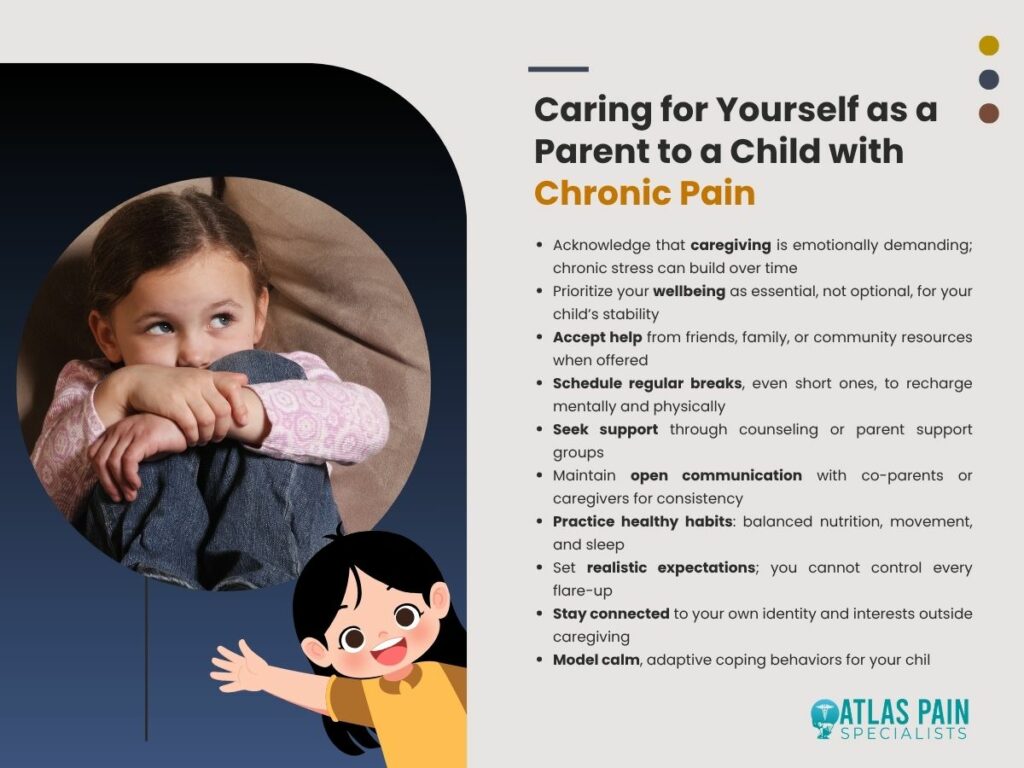
Caring for a child with chronic pain can be emotionally exhausting. Parents often operate in constant vigilance mode, anticipating the next flare up. Over time, this stress can accumulate.
Your wellbeing directly affects your child’s emotional stability, making self care a necessity rather than a luxury. Seek support from trusted friends, counseling services, or parent groups. Accept help when offered. Even small breaks can restore perspective.
Maintain open communication with co parents or other caregivers. Aligning on routines and expectations reduces conflict and creates consistency for your child.
Modeling healthy coping behaviors, such as exercise, balanced nutrition, and emotional expression, sends a powerful message.
Parenting a Child with Chronic Pain
Parenting a child with chronic pain is not about eliminating every difficult day. It is about creating an environment where your child feels understood, supported, and capable. Pain may remain part of their life, but it does not have to define their identity or limit their potential.
As children grow, new questions naturally emerge about long term planning, higher education, employment, and independent healthcare management. Exploring how families can guide adolescents toward confident self advocacy becomes the next important conversation in supporting children who grow up navigating persistent pain.
About Dr. Sean Ormond

Dr. Sean Ormond is dual board-certified in Anesthesiology and Interventional Pain Management. He completed his anesthesia residency at Case Western University in Cleveland, Ohio where he served as Chief Resident, followed by an interventional pain management fellowship at Rush University in Chicago, IL. Following fellowship, Dr. Ormond moved to Phoenix and has been practicing in the Valley for a few years before deciding to start his own practice.